



Call Us
+86-573-86058220
Email Us
[email protected]

Why Is Self Drilling Screw Becoming More Common in Modern Steel Construction?
Modern steel construction places increasing demands on fastening speed, connection consistency and installation flexibility. Contractors often work with metal sheets, steel frames, roof panels and prefabricated components where thousands of screws may need to be completed within a limited construction period. Traditional fastening methods can involve additional drilling, hole alignment and tool changes, all of which add time to the installation process. A self-drilling fastener combines drilling and fastening functions in one component, helping installers complete suitable metal-to-metal connections with fewer separate operations. This practical advantage has made it an increasingly relevant option for steel building projects, industrial structures and metal fabrication.
The growing use of this fastening solution is not simply a matter of construction speed. Drill-point design, thread geometry, head configuration, material selection, protective coatings and installation control all influence the performance of a finished connection. Different projects also require different specifications. A roofing contractor may prioritise a hex washer head and a suitable sealing washer, while a fabricator working with overlapping metal panels may prefer another head profile or drive configuration. Jiaxing Runyee Metal Technology Co., Ltd. supplies several fastener configurations, including DIN7504K, DIN7504P and DIN7504N models, giving buyers options for different assembly requirements. Understanding how these features work helps engineers, contractors and distributors make more informed purchasing decisions.
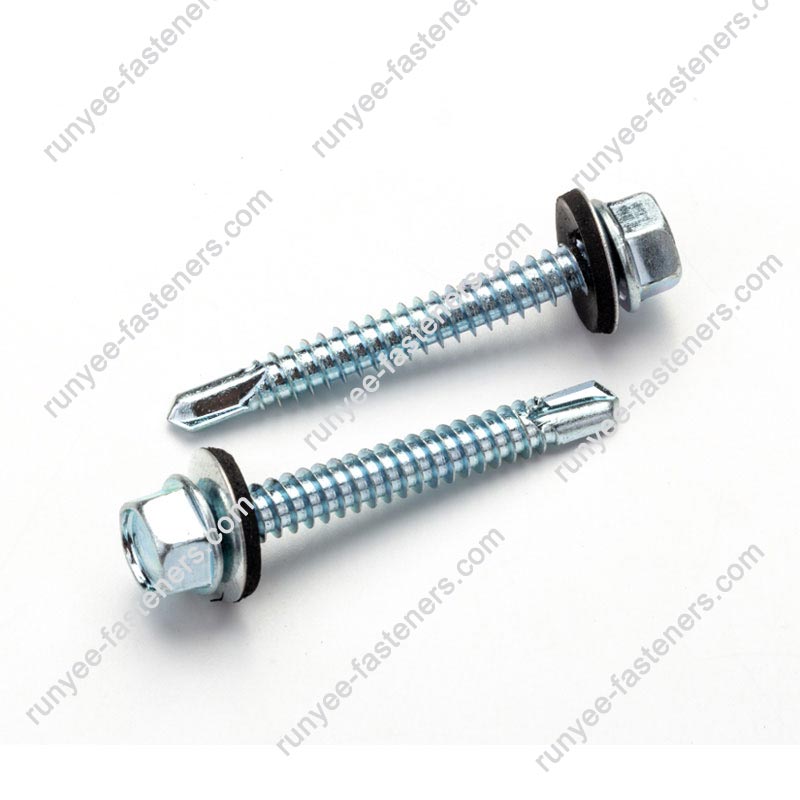
Table of Contents
1. How Does Integrated Drilling Improve Steel Construction Efficiency?
2. Why Do Design Details Matter for Connection Reliability?
3. Which Product Specifications Should Steel Construction Buyers Compare?
4. How Can Buyers Evaluate Suppliers and Control Fastener Quality?
How Does Integrated Drilling Improve Steel Construction Efficiency?
Steel construction projects are built around coordinated operations. Structural members must be positioned, panels aligned, components secured and connection points checked before the next stage can proceed. Even a small delay at each fastening point can become significant when multiplied across a large roof, wall system or industrial building. One reason the Self Drilling Screw has become more common is that its drill-point tip can create a hole in suitable materials while the fastener advances into position. The installer does not need to complete a separate drilling operation for every connection when the material combination and fastener capacity allow direct drilling.
This changes the sequence of work. With a conventional fastening arrangement that requires pre-drilling, workers may need to mark the location, select a drill bit, make the hole, remove drilling debris, reposition the tool and then install the fastener. An integrated drilling design can reduce some of these steps. The actual time saving depends on the substrate, material thickness, operator experience, tool condition and installation environment, but removing an unnecessary operation can make a noticeable difference across repetitive assembly work.
Where can this installation method make the greatest difference?
The advantages are particularly relevant in applications where metal components are repeatedly joined and access to the fastening point is reasonably straightforward. Common examples include:
- Roofing systems: Metal roof sheets and suitable supporting steel members often require many fastening points. A correctly selected fastener can simplify the installation sequence and help crews maintain a consistent working rhythm.
- Wall cladding: Metal façade panels and profiled wall sheets need secure attachment to an appropriate substructure. Fastener selection must account for the panel profile, supporting material and exposure conditions.
- Steel fabrication: Workshops assembling sheet-metal parts, brackets and light-gauge steel components can benefit from reducing separate drilling steps during repetitive production.
- Prefabricated buildings: Factory-based assembly often involves repeated connections under controlled conditions. A suitable drilling fastener can help standardise the fastening sequence between production stations.
- Industrial enclosures: Equipment housings, covers and sheet-metal guards may use direct-drilling fasteners where the material thickness and design are compatible.
These applications do not mean that one fastener specification is suitable for every steel connection. A fastener designed for thin sheet metal should not automatically be used for a thick structural section. The drill point has a working capacity, and the screw must be able to penetrate the material without excessive heat, premature point damage or thread failure. Where the substrate exceeds the specified drilling capability, a different fastener or a pre-drilled connection may be necessary.
How does fewer-step installation affect site coordination?
Construction efficiency is not measured only by the time spent operating a drill. It also includes tool availability, worker movement, material handling and the coordination of different trades. When pre-drilling is required, crews may need to manage separate drilling tools and fastening tools. They must also keep suitable drill bits available and replace worn bits before hole quality deteriorates. A combined drilling and fastening operation can simplify this equipment arrangement for compatible applications.
For example, consider a contractor installing a large quantity of metal roof panels. The crew needs to position each sheet, check the overlap, align the panel with the supporting purlin and complete the fastening pattern. If the selected fastener can drill through the specified sheet and supporting material, the worker can proceed directly to fastening after positioning. This does not eliminate the need for layout checks or correct screw spacing. It simply reduces the number of separate operations involved in making each connection.
Jiaxing Runyee Metal Technology Co., Ltd. offers several head configurations for buyers who need to match the fastening method to the assembly. Hex washer head, flat head and pan head designs serve different seating and appearance requirements. The choice should be based on the joint design rather than on installation speed alone. A head that is convenient to drive but unsuitable for the bearing surface can create installation problems even if the drilling operation is completed quickly.
What installation conditions still need attention?
Direct drilling does not mean that installation can be performed without control. A suitable power tool, compatible driver bit and stable working angle are still important. Excessive driving speed or torque can damage the screw, strip the formed thread or deform a thin panel. Insufficient driving force may prevent the fastener from seating correctly. For assemblies using sealing washers, over-compression can also affect washer performance.
Before starting production or site installation, the project team should confirm the following:
- Identify the base material and the total thickness that the drill point must penetrate.
- Check the fastener manufacturer's stated drilling capacity for the selected model.
- Confirm the required screw length, including the material stack and the necessary thread engagement.
- Select a driver and bit that fit the screw drive accurately.
- Establish a suitable installation speed and torque through a representative trial connection.
- Inspect sample joints for seating, panel deformation, thread engagement and washer compression where applicable.
It is also important to distinguish installation convenience from structural design approval. A fastener that drills efficiently is not automatically suitable for a load-bearing structural connection. Engineers must consider the applicable design standard, connection loads, pull-out resistance, pull-over resistance, corrosion exposure and the supporting material. In many projects, the fastening schedule should be reviewed against the building specification rather than selected solely by the installation team.
In practical terms, integrated drilling is valuable because it can simplify a repetitive operation without changing the basic need for sound engineering. When the substrate, point capacity and connection design are compatible, it can help contractors reduce unnecessary steps, organise tools more efficiently and maintain a more predictable installation process.
Why Do Design Details Matter for Connection Reliability?
A fastening connection is a small assembly, but its performance depends on several interacting details. The head transfers clamping force to the material surface, the drive allows torque to be applied, the thread engages with the substrate and the drill point creates the opening needed for installation. If any part is poorly matched to the application, the finished connection may not perform as intended. This is why steel construction buyers should look beyond the general product name and examine the design features of each model.
How do head styles influence the finished joint?
Head geometry affects the contact area, seating position, appearance and tool access of a fastener. It also influences how force is distributed around the fastening point. The following comparison outlines common configurations in the RUNYEE product range and the types of considerations buyers should evaluate.
| Head configuration | Typical design characteristics | Selection considerations |
| Hex washer head | Hexagonal head with an integrated bearing flange or washer-style contact area | Useful where a hex driver is preferred and a wider bearing surface is required |
| Hex flange head | Hexagonal drive head with a flange beneath the head | Consider tool access, bearing surface and the specified seating arrangement |
| Flat or countersunk head | Conical underside intended to sit in a compatible countersunk surface | Suitable where a lower-profile or flush appearance is required and the material supports the seating geometry |
| Pan head | Rounded top with a relatively broad bearing surface | Useful where a protruding rounded head is acceptable and the joint needs a defined bearing area |
| Modified truss head | Wide, low-profile head geometry | Consider the required coverage, available clearance and panel surface condition |
| Wafer head | Broad, relatively low-profile head | Can be considered where a wider contact footprint is needed without a tall head profile |
| Pan framing head | Pan-style profile intended for particular framing and sheet-metal assemblies | Check the actual product dimensions and compatibility with the connected materials |
| Pancake head | Low-profile, broad head design | Evaluate clearance and the required contact area in the finished assembly |
Head names alone do not establish load capacity. Two screws with similar-looking heads may differ in diameter, head height, bearing dimensions, material condition and manufacturing tolerances. Buyers should request a drawing or technical specification when the head dimensions affect the joint design. They should also confirm whether a washer is integrated, supplied separately or not included.
Why are DIN7504K, DIN7504P and DIN7504N frequently compared?
These three designations represent distinct configurations in the manufacturer's product offering. They are useful reference points when buyers need to compare head styles and dimensions, but they should not be treated as interchangeable descriptions.
- DIN7504K: A hexagon washer head configuration commonly considered for metal sheet fastening. Depending on the selected version, a washer option may be specified for applications where the joint needs a wider bearing surface or a sealing component.
- DIN7504P: A Phillips countersunk flat head configuration. Its design is relevant where the finished head needs to sit relatively flush with a compatible countersunk seating surface.
- DIN7504N: A Phillips pan head configuration with a rounded, raised head profile. It can be considered for sheet-metal assemblies where a pan-style head is appropriate.
Jiaxing Runyee Metal Technology Co., Ltd. lists these models with C1022 hardened carbon steel C1022A as the stated material. The published model information also provides different dimensional ranges for each designation. Buyers should therefore compare the exact model page, drawing and order specification instead of assuming that all three share one universal size range.
How do threads and drill points work together?
The drill point and thread perform different but closely connected jobs. The point creates the opening through the material, while the thread forms engagement with the substrate as the fastener advances. If the point is not suited to the material thickness, the screw may struggle to penetrate. If the thread form is not compatible with the substrate, the connection may not develop the intended engagement.
Several variables should be considered together:
- Base material: Thin sheet steel, heavier steel sections and non-metal substrates behave differently during drilling and thread formation.
- Material thickness: The required drilling capacity must cover the complete material combination that the point needs to penetrate.
- Thread form: Standard, fine or coarse thread options should be selected according to the substrate and product specification.
- Thread engagement: The screw needs sufficient engagement in the supporting material. Excessive length is not automatically beneficial and may interfere with components behind the joint.
- Installation control: Correct alignment and controlled driving help reduce cross-threading, stripping and surface damage.
It is also useful to understand the difference between drilling and tapping. A drilling point creates the initial hole in a suitable substrate. The thread then forms or engages with the material as the fastener is driven. A conventional self-tapping screw may form or cut its mating thread but does not necessarily have the same drill-point capability. The two product types should only be substituted after checking the application requirements.
What role do washers play in exposed steel construction?
In roofing and exterior cladding, the fastening point may also need to resist water entry. Some hex washer head configurations can be supplied with bonded washers, including EPDM, rubber or other specified materials. A suitable washer can help distribute contact pressure and provide a sealing interface around the penetration. However, the presence of a washer does not guarantee a watertight roof. Sealing performance depends on washer material, dimensions, panel profile, fastener position, installation compression and long-term exposure.
For this reason, buyers should confirm the washer material and whether it is included in the quoted configuration. They should also consider UV exposure, temperature variation, water contact and compatibility with the roofing material. A washer that is appropriate for one environment may not be the best choice for another.
Reliable fastening comes from matching the complete assembly rather than selecting a screw by head style alone. The head, drive, thread, point, coating and washer should all be considered as parts of one engineered connection.
Which Product Specifications Should Steel Construction Buyers Compare?
Specification review is one of the most important stages of fastener purchasing. A product description may contain several available materials, dimensions, coatings and drive types, but not every combination is necessarily available for every model. Buyers should separate confirmed model data from general customisation options and verify the final configuration before placing an order. This is particularly important for projects with strict installation schedules, multiple panel thicknesses or exposure to outdoor conditions.
What are the published dimensions of the main models?
The following table summarises the dimensional ranges published for three representative models. These figures refer to the listed model ranges, not to every fastener in the manufacturer's catalogue.
| Specification | DIN7504K | DIN7504P | DIN7504N |
| Head style | Hexagon washer head | Phillips countersunk flat head | Phillips pan head |
| Stated material | C1022 hardened carbon steel C1022A | C1022 hardened carbon steel C1022A | C1022 hardened carbon steel C1022A |
| Diameter range | 3.5–6.3 mm | 3.5–6.3 mm | 3.5–6.3 mm |
| Published length range | 9.5–280 mm | 13–280 mm | 9.5–280 mm |
| Thread options listed | Standard, fine, coarse, full and half thread | Standard, fine, coarse and full thread | Standard, fine, coarse and full thread |
| Drive options listed | Varies by selected configuration | Phillips, Torx, Square and Slotted options listed | Phillips, Torx, Square and Pozi options listed |
The table is a starting point for model comparison. It should not replace the approved drawing or order-specific technical sheet. For example, a diameter and length combination shown within a model range still needs to be checked for availability, point design, thread configuration and intended application. The selected fastener must also provide the required engagement after passing through all connected materials.
How should buyers assess material and hardness?
C1022 hardened carbon steel C1022A is the stated material for the three models above. Material selection is relevant because the fastener must withstand the stresses generated during drilling, driving and service. The screw needs sufficient strength for its intended fastening task, but material designation alone does not provide a complete picture of mechanical performance.
When reviewing a quotation or technical document, procurement teams should request confirmation of the following information where relevant:
- Material grade and applicable material standard.
- Heat-treatment condition and hardness requirements.
- Mechanical properties required by the project specification.
- Dimensional tolerances for diameter, length, head and thread.
- Drill-point configuration and verified drilling capability.
- Applicable inspection records or test documentation.
Do not assume a particular hardness, tensile strength or maximum drilling thickness unless it is stated in the technical documentation for the exact product. These values can vary with product dimensions, manufacturing conditions and the applicable standard. If the project has a defined performance requirement, the supplier should confirm the relevant test method and acceptance criteria before mass production.
Which coating options are relevant to steel construction?
Steel fasteners used outdoors or in demanding industrial environments need a suitable corrosion-protection system. RUNYEE lists several coating options, including zinc plating, Dacromet, Ruspert, nickel, Magni and phosphating. The choice depends on the exposure environment, base material, coating system, required appearance and project specification.
- Zinc plating: A commonly specified finish for general corrosion protection in suitable service conditions. The coating thickness and any passivation treatment should be confirmed.
- Dacromet: A zinc-aluminium flake coating system used in applications where corrosion resistance is an important consideration. Confirm the specified coating system and test requirements.
- Ruspert: A multi-layer coating option used for enhanced corrosion protection in selected fastening applications. Performance should be checked against the project exposure category.
- Nickel: A coating option that can provide a particular surface appearance and functional characteristics. Its suitability depends on the service environment and specification.
- Magni: A branded coating family with different formulations. Buyers should identify the exact system rather than relying on the name alone.
- Phosphating: A conversion coating often used as a surface-treatment or preparation layer. Its corrosion performance depends on the complete finishing system.
There is no single coating that is automatically best for every steel building. A fastener used in a dry indoor enclosure faces different conditions from one exposed to coastal air, industrial pollutants or persistent moisture. Coating selection should be based on the expected environment and the required service life. Where the project specification includes salt-spray testing or another corrosion test, the buyer should request the relevant test report and confirm that it applies to the quoted coating and product configuration.
How should buyers choose the correct screw length and washer?
Length selection should begin with the material stack. Buyers need to identify the thickness of each layer, the supporting material and the engagement required by the connection design. A screw that is too short may not achieve sufficient engagement. A screw that is unnecessarily long may interfere with concealed services, internal components or adjacent assemblies.
For roof and cladding applications, the washer should be considered alongside the head and panel profile. A bonded EPDM washer may be specified where a sealing interface is required, but its diameter, thickness and compression behaviour need to match the joint. The fastener should be installed so that the washer is seated correctly without being excessively crushed or left loose.
Before confirming a purchase, our technical team recommends that buyers prepare a specification sheet containing the substrate, total material thickness, screw diameter, required length, head style, drive type, thread form, coating, washer requirement and packaging details. This makes quotation comparisons more meaningful and reduces the risk of receiving a product that matches the general description but not the actual assembly.
Jiaxing Runyee Metal Technology Co., Ltd. provides model-specific options and custom packaging arrangements. For a project requiring several dimensions or finishes, the buyer should confirm which combinations can be supplied together, the production lead time and whether samples are available for installation trials. Clear specification control is more valuable than relying on a broad catalogue description.
How Can Buyers Evaluate Suppliers and Control Fastener Quality?
Choosing a supplier involves more than comparing unit prices. Fasteners are often purchased in large quantities, and a small difference in dimensions, coating consistency or packaging can affect installation efficiency across an entire project. If a shipment contains mixed specifications or inconsistent finishes, contractors may face sorting work, installation delays and additional inspection costs. A capable supplier should therefore be able to explain its product range, clarify technical requirements and maintain traceability between the confirmed specification and the delivered goods.
What manufacturing information should a buyer request?
Jiaxing Runyee Metal Technology Co., Ltd. states that it has specialised in fasteners since 2013 and operates as a manufacturer and trading enterprise. Its published company information identifies a production facility in Haiyan County, Jiaxing, Zhejiang, China, with more than 350 sets of machinery, a factory area of approximately 13,000 square metres and a stated production capacity of around 1,200 tonnes per month. The company also reports an ISO 9001 quality management system.
These figures provide useful background, but buyers should still evaluate whether the supplier's actual production and inspection arrangements match the requirements of their order. Factory size and equipment quantity do not, by themselves, prove that a particular batch meets a project's technical specification. A professional sourcing process should include questions about production control, inspection procedures, nonconforming product handling and shipment documentation.
Useful questions include:
- Which production processes are completed in-house, and which are outsourced?
- How are incoming wire materials checked and identified?
- What controls are used for forming, heat treatment, thread rolling and surface finishing?
- How are dimensional tolerances and product appearance inspected?
- Can the supplier provide batch identification and inspection records?
- How are coating requirements communicated to the finishing process?
- What procedure is followed if a delivered batch does not meet the approved specification?
These questions are especially relevant when a project requires repeated orders over several months. Consistency between batches can be just as important as the quality of the first sample. Buyers should retain approved samples, drawings and purchase specifications so that subsequent deliveries can be checked against the same requirements.
How can incoming inspection reduce project risk?
Incoming inspection should be proportionate to the application and the risks associated with the fastener. A basic check may confirm the model, diameter, length, head profile, drive type, finish and packaging label. More demanding projects may require dimensional sampling, coating verification, mechanical testing or a review of material certificates.
A practical incoming inspection sequence can be organised as follows:
- Document review: Compare the purchase order, packing list, product label and technical specification. Check that the model and finish match the approved order.
- Visual inspection: Look for damaged heads, deformed points, visible cracks, burrs, inconsistent finishes and contamination.
- Dimensional sampling: Measure representative samples for diameter, length, head dimensions and other critical features defined by the drawing.
- Drive fit check: Confirm that the specified driver bit engages correctly and does not show abnormal looseness or interference.
- Installation trial: Use representative substrate samples to assess drilling, thread engagement, seating and washer compression where applicable.
- Record keeping: Retain inspection results and identify the batch so that any issue can be traced to the relevant shipment.
A site trial is particularly useful because a fastener can meet dimensional requirements yet still be unsuitable for a particular assembly. The actual substrate, tool settings and operator technique can influence installation results. Testing a representative joint before large-scale use helps identify problems before they affect a complete roof section or production run.
What should distributors and contractors confirm before ordering?
Purchasing requirements vary between end users, distributors and construction contractors. A contractor may need a specific head and washer combination for an immediate installation. A distributor may need several dimensions in stock and consistent packaging for resale. A large fabricator may prioritise stable batch quality, repeatability and scheduled deliveries. The supplier quotation should make these requirements visible rather than leaving them to assumptions.
RUNYEE's published product pages state a minimum order quantity of 1,000 kg per size for the listed DIN7504K, DIN7504P and DIN7504N models. The same pages indicate that one container may combine up to 25 sizes, subject to confirmation. These terms are relevant to bulk procurement, but the buyer should verify the final MOQ, mixed-size arrangement and shipment plan with the sales team before issuing a purchase order.
Our purchasing checklist for a bulk order includes:
- Exact model designation and applicable standard.
- Diameter, length and quantity for each size.
- Head profile and drive type.
- Material and heat-treatment requirements.
- Coating type and any specified coating test.
- Washer material, dimensions and inclusion in the assembly.
- Packaging format, carton identification and labelling.
- MOQ, mixed-size container conditions and production schedule.
- Pre-shipment inspection arrangements and required documents.
Packaging is also part of order control. Small boxes may suit hardware distributors and retail channels, while bulk cartons or bags can be more practical for industrial users. Wooden cartons or other customised arrangements may be considered for particular shipping requirements. The packaging should protect the product during transport and make model identification straightforward after delivery.
Why does technical communication matter as much as price?
A low quotation is not necessarily the lowest-cost option once installation, inspection, transport and potential rework are considered. If the fastener is incorrectly specified, the buyer may need to replace the shipment or modify the assembly. If the coating is not suitable for the environment, the connection may require earlier maintenance or replacement. If the drill point is not matched to the substrate, installation may become slower and less predictable.
Good supplier communication reduces these risks. Buyers should provide drawings, material details, photographs of the intended joint and any applicable project standards. Suppliers should respond with a clear configuration, identify any information that remains unconfirmed and avoid promising performance values that are not supported by product testing. This is particularly important for drilling capacity, mechanical properties and corrosion resistance, because these are technical characteristics that should be tied to a defined model and test method.
Runyee describes its business as serving overseas markets including Europe, South America, the Middle East, South Africa and Asia. For international buyers, clear communication should also cover export packaging, shipping marks, documentation, lead times and the handling of specification changes. A confirmed sample and written technical agreement provide a stronger basis for repeat purchasing than a general product description.
When buyers compare suppliers, the most useful decision is not simply to choose the lowest price per thousand pieces. It is to select a supplier that can consistently deliver the required dimensions, material, coating, packaging and documentation. Our factory's stated fastener experience, production resources and range of head configurations provide a basis for discussing project requirements, while the final order should always be confirmed against an approved specification.
Conclusion
The growing use of integrated drilling fasteners in steel construction is driven by practical demands: fewer installation steps, more efficient repetitive fastening and a wider choice of head and surface-treatment configurations. Their suitability, however, depends on correct engineering decisions. Material thickness, drill-point capacity, thread engagement, head geometry, coating and washer selection all influence the finished connection. Buyers should evaluate the complete fastening assembly rather than relying on a product name or a general catalogue description.
Runyee offers DIN7504K, DIN7504P and DIN7504N configurations, together with different dimensions, thread options, finishes and packaging arrangements. If you are sourcing fasteners for roofing, metal cladding, steel fabrication or another construction application, contact our team with your drawings, material thickness, required dimensions and coating requirements. We can help you review the available configurations and discuss a suitable quotation for your project.
Frequently Asked Questions
1. Why is this fastening method increasingly used in modern steel construction?
It is increasingly used because the drill-point design can combine hole formation and fastening in one operation when the substrate and material thickness are within the product's specified capacity. This can reduce separate drilling steps, simplify tool handling and support faster repetitive installation in suitable roofing, cladding and sheet-metal applications. The actual benefit depends on the selected fastener, substrate, equipment and installation procedure.
2. How should contractors determine whether a fastener can drill through a steel section?
Contractors should identify the exact steel grade or material type, total thickness to be penetrated and the supporting structure, then compare these details with the manufacturer's verified drilling-capacity information for the selected model. A representative installation trial is advisable before mass installation. If the material exceeds the stated drilling capability, the contractor should select another approved fastening method rather than forcing the screw through the section.
3. What is the difference between DIN7504K, DIN7504P and DIN7504N?
The main distinction is their head configuration. DIN7504K is a hexagon washer head design, DIN7504P is a Phillips countersunk flat head design, and DIN7504N is a Phillips pan head design. These profiles offer different seating characteristics and appearance. Buyers should also compare dimensions, drive options, thread form, coating and washer requirements because specifications can vary between models.
4. Which coating should buyers select for outdoor steel construction?
The coating should be selected according to the exposure environment, project specification and required corrosion-protection performance. Zinc plating may suit certain general-purpose applications, while systems such as Dacromet or Ruspert may be considered where different corrosion-protection requirements apply. Buyers should confirm the exact coating system, coating thickness where specified, applicable test method and supporting documentation instead of assuming that a coating name alone guarantees a particular service life.
5. What information should be included when requesting a bulk quotation?
A complete enquiry should state the model or head style, diameter, length, quantity by size, material, thread configuration, drive type, coating, washer requirement and packaging preference. Buyers should also provide the substrate material and thickness, intended application, applicable standards and any inspection or testing requirements. For large orders, confirm the MOQ, mixed-size container conditions, sample approval process, production lead time and shipment documentation before placing the order.
Send Inquiry




X
We use cookies to offer you a better browsing experience, analyze site traffic and personalize content. By using this site, you agree to our use of cookies.
Privacy Policy
News
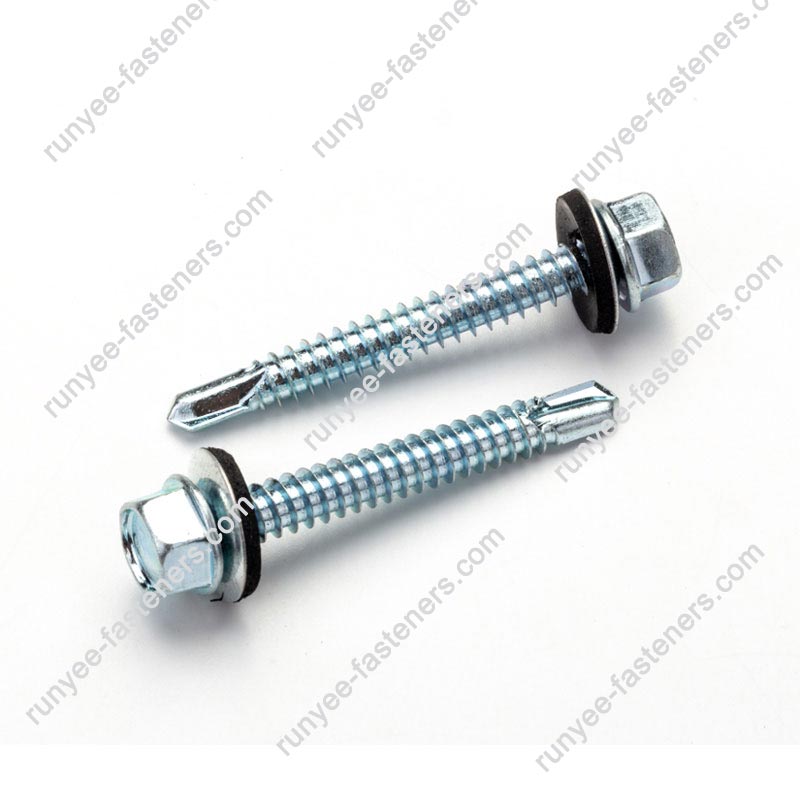 Why Is Self Drilling Screw Becoming More Common in Modern Steel Construction?2026/11/20
Explore why self-drilling fasteners are increasingly used in steel construction, including installation efficiency, head designs, material options, coatings, specifications and sourcing considerations.
 How Does Wafer Head Chipboard Screw Improve Modern Fastening Applications?2026/09/22
Wafer Head Chipboard Screw has become an important solution for applications that require secure connections in wood-based materials and various assembly environments. Its optimized head design and practical fastening performance help improve installation efficiency while maintaining strong holding ......