



Call Us
+86-573-86058220
Email Us
[email protected]

Why Choose Phillips Pan Head Chipboard Screw Coarse Thread for Your Projects?
Phillips pan head chipboard screws with coarse threads are essential for woodworking and construction projects where strong holding power and ease of installation are required. This article explores their features, benefits, applications, installation tips, and common challenges, helping professionals and DIY enthusiasts make informed decisions.
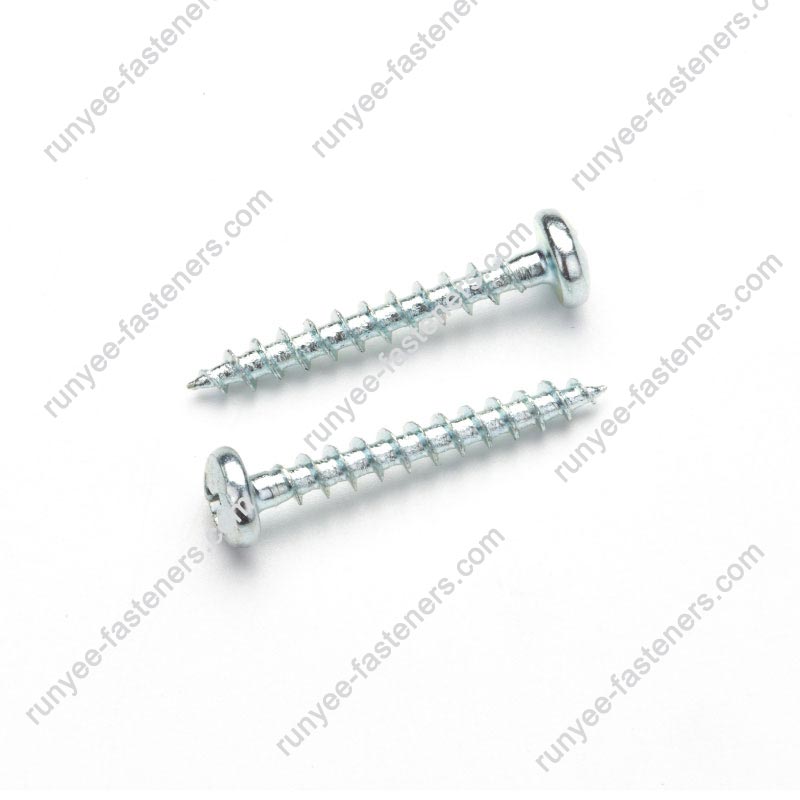
Table of Contents
- Key Features of Phillips Pan Head Chipboard Screws
- Advantages of Using Coarse Thread Screws
- Typical Applications
- Installation Techniques
- How to Choose the Right Screw
- Common Challenges and Solutions
- Frequently Asked Questions
- Contact Jiaxing Runyee Metal Technology Co., Ltd.
Key Features of Phillips Pan Head Chipboard Screws
Phillips pan head chipboard screws are designed for optimal grip and durability in chipboard and other engineered wood materials. Their design incorporates several features that set them apart:
- Pan Head Design: Provides a large bearing surface to prevent material damage and ensure a flush finish.
- Phillips Drive: Enables efficient driving with minimal slippage and reduces cam-out.
- Coarse Thread: Ensures fast engagement with chipboard fibers, providing maximum holding power.
- Corrosion Resistance: Many screws are coated to resist rust and environmental damage.
- Variety of Sizes: Available in multiple diameters and lengths to fit diverse project needs.
Advantages of Using Coarse Thread Screws
Coarse thread chipboard screws offer distinct benefits over fine thread screws when working with engineered wood:
- Enhanced Holding Power: Coarse threads bite deeper into wood particles, reducing pull-out risk.
- Faster Installation: Larger thread spacing allows quicker driving, saving time in large projects.
- Reduced Splitting: The thread design distributes pressure evenly, preventing material splitting.
- Versatility: Suitable for softwood, particle board, MDF, and laminated surfaces.
Typical Applications
Phillips pan head chipboard screws are widely used in both professional and DIY projects:
- Furniture assembly, including cabinets, drawers, and shelves.
- Wooden flooring installation and subflooring.
- Fixing laminate panels and decorative wooden trims.
- DIY woodworking projects like storage units or small wooden structures.
- General construction where engineered wood panels are used.
Installation Techniques
Proper installation is key to maximize the performance of chipboard screws. Follow these steps:
- Pre-drilling: Although coarse thread screws can often penetrate chipboard without pre-drilling, drilling a pilot hole reduces splitting in thick or dense panels.
- Using the Correct Driver: Use a Phillips screwdriver or electric drill with a Phillips bit to avoid cam-out.
- Correct Screw Length: Choose a screw length that penetrates sufficiently without coming out the opposite side.
- Even Pressure: Apply steady pressure while driving to avoid stripping the screw head.
| Component | Recommendation | Reason |
|---|---|---|
| Pilot Hole Diameter | 80% of screw core diameter | Prevents splitting and reduces driving torque |
| Driver Type | Phillips | Prevents cam-out and ensures efficient installation |
| Screw Material | High-quality steel with coating | Resists corrosion and extends service life |
| Torque | Medium to high (manual or electric) | Ensures proper embedment without stripping |
How to Choose the Right Screw
Selecting the correct Phillips pan head chipboard screw depends on several factors:
- Material Thickness: Ensure screw length is at least 1.5 times the thickness of the panel for maximum holding.
- Environmental Conditions: For outdoor use, choose rust-resistant or galvanized screws.
- Load Requirements: Heavier loads require screws with thicker diameters or longer lengths.
- Drive Compatibility: Use the correct Phillips bit to avoid stripping.
Common Challenges and Solutions
Even experienced users may encounter problems with chipboard screws. Here are typical issues and solutions:
- Stripped Heads: Use a high-quality Phillips driver and apply steady pressure.
- Panel Splitting: Pre-drill pilot holes or countersink the screw.
- Pull-Out: Opt for screws with deeper coarse threads or longer length.
- Rusting: Choose coated or stainless steel screws for humid or outdoor environments.
Frequently Asked Questions
Q1: Can I use coarse thread screws on MDF?
A1: Yes, coarse thread screws work well with MDF, providing excellent grip without splitting the board.
A1: Yes, coarse thread screws work well with MDF, providing excellent grip without splitting the board.
Q2: What size of screw should I use for 18mm chipboard?
A2: A 4x50mm or 4x60mm Phillips pan head screw is typically suitable, ensuring adequate penetration and holding power.
A2: A 4x50mm or 4x60mm Phillips pan head screw is typically suitable, ensuring adequate penetration and holding power.
Q3: Is pre-drilling necessary for thin chipboard panels?
A3: For panels thinner than 15mm, pre-drilling is recommended to prevent splitting.
A3: For panels thinner than 15mm, pre-drilling is recommended to prevent splitting.
Q4: How do I prevent cam-out when using a Phillips screw?
A4: Use a well-fitted Phillips driver or bit, maintain straight alignment, and apply steady pressure.
A4: Use a well-fitted Phillips driver or bit, maintain straight alignment, and apply steady pressure.
Contact Jiaxing Runyee Metal Technology Co., Ltd.
At Jiaxing Runyee Metal Technology Co., Ltd., we specialize in manufacturing reliable, precision-engineered fastening products designed to meet the demands of furniture production, construction, industrial assembly, and customized applications worldwide.
Contact us today to discuss your project requirements, request product samples, or receive a customized quotation. We look forward to helping you find the most efficient and cost-effective fastening solution for your business.
Send Inquiry




X
We use cookies to offer you a better browsing experience, analyze site traffic and personalize content. By using this site, you agree to our use of cookies.
Privacy Policy
News
 Do gypsum screws need to be rust-proofed?2024/08/26
Whether the self-tapping screws of gypsum board ceiling need to be painted with anti-rust paint depends on the type of screws and construction habits.
 What screws are best for sealing windows?2024/09/11
During the window sealing process, it is crucial to choose the right screws to ensure the stability and safety of the windows. According to the available information, 304 stainless steel pull-out screws are the recommended screw types for window sealing. This type of screw is widely considered to ......