



Call Us
+86-573-86058220
Email Us
[email protected]

Why Do Flat Concrete Screws Shape the Future of Secure Fastening?
Flat concrete screws have become a preferred fastening solution across construction, renovation, and industrial installation due to their strong holding power, ease of use, and compatibility with dense materials.
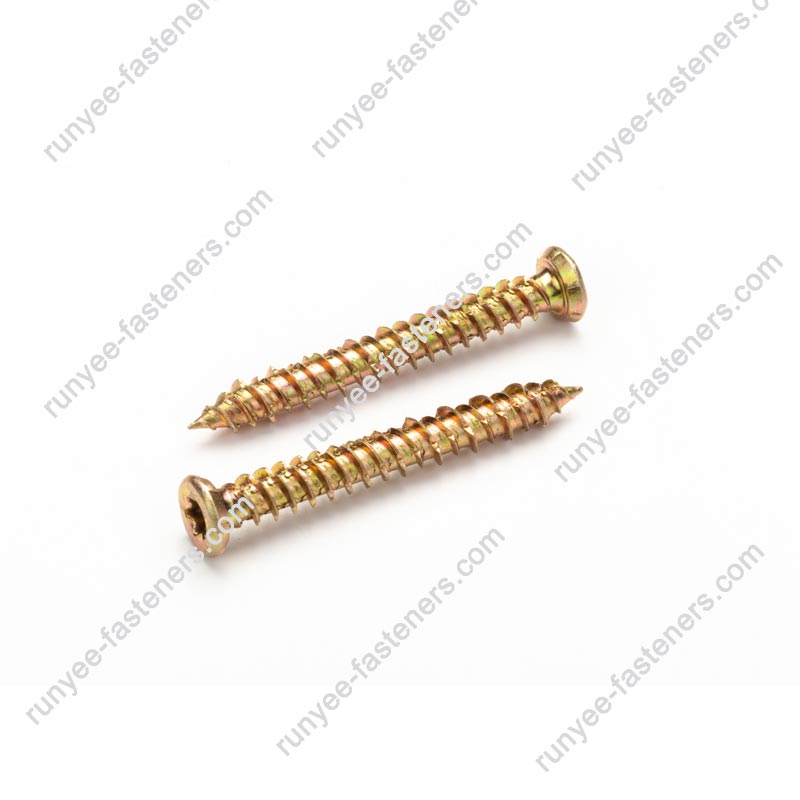
How Flat Concrete Screws Strengthen Modern Construction?
Flat concrete screws are specifically engineered for direct anchoring into concrete, brick, block, and other masonry substrates. Their sharp threads, controlled diameter, and hardened steel composition allow them to cut into concrete without cracking the substrate. In environments that require stable, vibration-resistant, and removable fastening, this type of screw offers a balanced combination of strength and convenience.
These screws are widely used in:
-
Electrical and plumbing installations
-
Heavy-duty shelving and bracket mounting
-
Framework and substructure fixing
-
Window and door frame anchoring
-
Mechanical equipment installation
-
Residential remodeling and commercial construction
Because they do not require plastic anchors and can be removed or reinstalled when needed, flat concrete screws provide flexibility that traditional expansion anchors cannot offer.
What Makes Flat Concrete Screws Technically Reliable?
The performance of flat concrete screws depends on their materials, surface treatment, thread geometry, and resistance to corrosion and environmental impact. High-quality screws follow strict dimensional control to ensure consistent engagement and holding force. The following table provides professional-level parameter details:
Technical Specifications of Flat Concrete Screws
| Specification | Description |
|---|---|
| Material Options | Carbon steel (Grade 6.8/8.8/10.9), Hardened steel, Stainless steel 304/316 |
| Thread Type | High-low concrete threads for improved penetration; twin-lead cutting flutes |
| Head Style | Flat countersunk head for flush installation on wood, metal, or brackets |
| Drive Type | Torx (T-star), Phillips, Square |
| Surface Coating | Blue ruspert, zinc-plated, mechanical galvanization, hot-dip galvanization |
| Diameter Range | 3.5 mm – 6.5 mm (standard) |
| Length Range | 25 mm – 200 mm depending on anchoring depth |
| Hardness Level | 52–58 HRC for hardened steel variants |
| Pull-out Strength | 600–1500 lbs depending on diameter and substrate |
| Corrosion Resistance | 48–1000+ hours salt-spray testing based on coating |
| Application Environment | Indoor, outdoor, coastal, industrial, mechanical installation |
These specifications demonstrate how flat concrete screws achieve strong mechanical performance while remaining easy to install. Their flat countersunk heads allow visible surfaces to remain smooth after installation, preventing obstruction in architectural or mechanical layouts.
How Do Flat Concrete Screws Improve Project Efficiency?
1. Direct Installation Without Anchors
One of the strongest advantages is anchor-free installation. The screw threads cut directly into the concrete, eliminating extra steps such as inserting plugs or expansion anchors. This saves time and reduces labor cost on large projects.
2. High Vibration Resistance
The deep cutting threads maintain consistent friction with the substrate. This makes them ideal for:
-
HVAC mounts
-
Vibration-producing machinery
-
Automotive service equipment
-
Structural reinforcement
The consistent grip prevents loosening under dynamic stress.
3. Reusable and Adjustable
Unlike expansion anchors that deform the concrete, flat concrete screws can be removed without damaging the substrate. This benefit is critical in:
-
Temporary construction
-
Equipment repositioning
-
Maintenance and inspection tasks
4. Compatibility With Multiple Substrates
These screws are suitable for:
-
Reinforced concrete
-
Lightweight concrete
-
Red brick
-
Cement block
-
Hollow block (with proper pilot holes)
This multi-material adaptability increases flexibility on mixed-material job sites.
How Will Flat Concrete Screws Evolve in the Future?
The fastening industry is shifting toward innovations driven by automation, sustainability, and performance optimization. Key future trends include:
1. Advanced High-Performance Coatings
Next-generation anti-corrosion coatings will offer:
-
Longer outdoor lifespan
-
Higher resistance to chemicals
-
Better durability in coastal and industrial environments
This aligns with global demands for long-term structural reliability.
2. Precision Thread Engineering
Thread design will further evolve to reduce installation torque while improving pull-out strength. Enhanced cutting flutes will generate less dust and minimize substrate damage.
3. Stronger Lightweight Materials
Research suggests that future screws may combine:
-
Ultra-high-strength alloy steel
-
Composite-reinforced coatings
-
Improved heat-treatment technology
This will reduce weight while maintaining or increasing load capacity.
4. Compatibility With Automated Tools
Construction is adopting automation and robotic fastening. Flat concrete screws will adapt through:
-
More consistent drive recesses
-
Anti-slippage head geometry
-
Uniform thread concentricity
This ensures stable machine-driven installation.
5. Environmentally Responsible Manufacturing
Sustainability trends encourage:
-
Reduced hazardous plating chemicals
-
Recyclable packaging
-
Energy-efficient heat treatments
These improvements benefit both manufacturers and end users seeking eco-friendly construction materials.
Frequently Asked Questions
Q1: How deep should the pilot hole be when installing flat concrete screws?
A: The pilot hole should typically be ¼ inch deeper than the screw’s embedded length. This additional depth allows dust to accumulate without preventing full penetration. For example, if the screw requires 40 mm of embedment, the pilot hole should be approximately 46–50 mm deep. Pilot hole diameter must match product specifications to ensure optimal torque control and pull-out resistance.
Q2: Can flat concrete screws be used in outdoor or coastal environments?
A: Yes, but coating selection is crucial. For general outdoor use, zinc-plated or ruspert-coated screws provide effective protection. In highly corrosive coastal or industrial environments, stainless steel 316 or hot-dip galvanized options are recommended to prevent rust and maintain long-term structural integrity. The correct coating ensures durability, safety, and lower maintenance costs.
How Do Quality Fasteners Build Stronger Structures?
Flat concrete screws continue to play a vital role in construction and infrastructure projects by providing high-strength fastening, ease of installation, and dependable performance across multiple substrates. Their technical advantages—such as anchor-free installation, vibration resistance, and corrosion-resistant surface treatments—make them an efficient and professional solution for modern builders.
As construction moves toward durability, automation, and sustainability, the role of well-engineered fasteners becomes even more important. Choosing reliable flat concrete screws ensures stable installation, long-term safety, and predictable performance under demanding conditions.
Manufacturers with strong engineering capability and quality control, such as Jiaxing Runyee Metal Technology Co., Ltd, provide products built to meet rigorous project requirements. For detailed specifications, bulk orders, or professional customization, contact us to receive tailored technical support and product solutions.
Send Inquiry




X
We use cookies to offer you a better browsing experience, analyze site traffic and personalize content. By using this site, you agree to our use of cookies.
Privacy Policy
News
 What screws are best for sealing windows?2024/09/11
During the window sealing process, it is crucial to choose the right screws to ensure the stability and safety of the windows. According to the available information, 304 stainless steel pull-out screws are the recommended screw types for window sealing. This type of screw is widely considered to ......
 Do gypsum screws need to be rust-proofed?2024/08/26
Whether the self-tapping screws of gypsum board ceiling need to be painted with anti-rust paint depends on the type of screws and construction habits.